
Engineering science
Supports open access
11.3
CiteSocre6.1
Impact Factor$3660
Article publishing charge for open access9 days
Time to first decision57 days
Review time135 days
Submission to acceptanceEditor-in-Chief

Christos Markides, BA (Hons), MEng, MA, PhD
Imperial College London, London, United KingdomIntroduce
Scientific Engineering is an international, peer-reviewed and open-access engineering academic journal. Adopt the method of soliciting manuscripts combined with manuscripts and submissions and the instant publishing mode of dynamic rolling publication. This journal is positioned to become a top academic journal in the first district of engineering SCi. In terms of the composition of the editorial committee, the review method, the author's academic ethics, and the ethics of academic publication, the highest standards in international academic publishing precedents are all taken as the operating This journal focuses on publishing academic achievements in engineering science and technology innovation in the fields of new generation information technology, artificial intelligence, quantum technology, biotechnology, new energy, new materials and so on. Relevant theoretical research, practical cases, research notes, newsletters and comments can be published in this journal, and there is no minimum or maximum length limit. In particular, we welcome practical cases of scientific and technological achievements applied to the field of production practice and scientific and technological achievements transformed into productivity. We look forward to the academic results published by us, which can play a role in promoting the sustainable development of human society, large or small, timely or lasting.
Articles & Issue
Contact us
All general editorial enquiries and correspondence about submission, the quality check process, publication agreements, and production queries should be addressed to srep@nature.com.
For enquiries about Guest Edited Collections please contact scirep.collections@nature.com.
For general enquiries, please use our Customer Service portal.
For press enquiries, please contact the press office.
For any other queries, contact the Open Research Support team:
OA.Verification@springernature.com for queries related to institutional eligibility
ORSupport@springernature.com for all other open access publishing queries (incl. payment support)
or call + 44 (0) 20 3192 2009.
Submissions
Manuscripts should be submitted through our online submission system. For more information, please see our step-by-step guides to manuscript preparation and submission. We will acknowledge receipt of your submitted manuscript by e-mail. Please do not send complete manuscripts by e-mail.
Notes for reviewers
Please return your referee comments to the URL included in the referee instruction letter which was sent to you after you agreed to review the manuscript.
Editorial office
The Campus
4 Crinan Street
London
N1 9XW
Tel: + 44 (0) 20 3192 2009
Chief Editor: Rafal Marszalek, PhD
Deputy Editor: Elizabeth Mann, PhD
Deputy Editor: Sweta Naik, PhD
Deputy Editor: Eve Rooks, PhD
Deputy Editor: Akila Sridhar, PhD
Deputy Editor: Madushi Wanaguru, PhD
Senior Editor: Silvia Butera, PhD
Senior Editor: João Leite, PhD
Senior Editor: Thomas Tischer, PhD
Associate Editor: Satej Bhushan, PhD
Associate Editor: Shelby Bollen, PhD
Associate Editor: Shital Bonde, PhD
Associate Editor: Will Bultitude, PhD
Associate Editor: Madhumita Chakladar, PhD
Associate Editor: Mrigyanka Chakravarty, PhD
Associate Editor: Shreyas Deshpande, PhD
Associate Editor: Githa Ann George, PhD
Associate Editor: Alakananda Karthick, PhD
Associate Editor: Mahesh Khot, PhD
Associate Editor: Sumedha Kondekar, PhD
Associate Editor: Supriya Lokhande, PhD
Associate Editor: Jessica Mengqian Luo, PhD
Associate Editor: Sneha Maheshwari, PhD
Associate Editor: Vijay Malesu, PhD
Associate Editor: Betty Mousikou, PhD
Associate Editor: Pradyumna Paranjape, PhD
Associate Editor: Rucha Paranjape, PhD
Associate Editor: Eshita Paul, PhD
Associate Editor: Vincent Pinto, PhD
Associate Editor: Claire Potter, PhD
Associate Editor: Joyce Rafferty, PhD
Associate Editor: Dhanashree Swami, PhD
Associate Editor: Snigdha Tiwari, PhD
Associate Editor: Rachel Toth, PhD
Associate Editor: Inês Trindade, PhD
Associate Editor: Chenyu Wang, PhD
Associate Editor: Junxia Wang, PhD
Associate Editor: Sagar Yadav, PhD
Marketing Manager: Samantha Zimbler
Senior Publishing Manager: Robbie Roe
Head of Publishing Strategy: Bastien Conan
Director, Publishing Strategy: Joe Bennett
Publishing Director: Richard White, PhD
Editor-in-Chief, Nature Portfolio: Magdalena Skipper, PhD
Journal policies
Scientific Reports' editorial, publishing and peer review policies help us maintain the highest standards for which we are known and respected.
Editorial and publishing policies
Our policies have been carefully developed to ensure that the responsibilities of our authors are well defined and that we publish research that is scientifically robust, original, and of the highest ethical standards.
To find out more, please visit our editorial and publishing policies page.
Peer review policies
We have rigorous policies to govern every stage and aspect of our peer review process, from initial submission through to revisions, decisions and appeals.
To find out more, please visit our peer review policies page.
Matters Arising
Matters Arising are exceptionally interesting and timely scientific comments and clarifications on original research papers published in Scientific Reports.
To find out more, please visit our Matters Arising page.
Guide to referees
- About Scientific Reports
- Criteria for publication
- The review process
- Selecting referees
- Writing the review
- AI use by peer reviewers
- Registered Reports
- Confidentiality
- Timing
- Anonymity
- Editing referees' reports
- Competing interests
- Online manuscript review
About Scientific Reports
Scientific Reports is an online, open access journal that publishes scientifically valid primary research from all areas of the natural and clinical sciences.
Editorial decisions are made by our Editorial Board of active researchers who manage the peer review process and decide which manuscripts should be published. Our Editorial Board Members are supported by an Editorial Advisory Panel and an in-house publishing team.
Criteria for publication
To be published in Scientific Reports, a paper must be scientifically valid and technically sound in methodology and analysis. Manuscripts are not assessed based on their perceived importance, significance or impact; the research community makes such judgements after publication. We are happy to publish papers of niche scope, that lie between disciplines, report negative results, or scientifically-justified replications.
The review process
Manuscripts that appear to be scientifically valid upon initial assessment will be sent for formal review.
After considering the reviewer reports, the Editorial Board Member will make one of the following decisions:
- Accept outright
- Request a minor revision, where authors revise their manuscript to address specific concerns
- Request a major revision, where authors revise their manuscript to address significant concerns and perhaps undertake additional work
- Reject outright
Upon submission of a revised manuscript, the Editorial Board Member may wish to ask the original reviewers for further advice. We, therefore, request that reviewers are willing to provide follow-up advice as requested. But Editorial Board Members will not send resubmitted papers to referees if it seems that the authors have not made a serious attempt to address the reviewers' criticisms.
Selecting referees
Reviewer selection is critical to the review process, and it is the responsibility of our Editorial Board Members to choose appropriate referees. Their choice is based on multiple factors, including expertise, specific recommendations, and previous experience. Invitations to review a manuscript are confidential.
Writing the review
The primary purpose of the review is to provide our Editorial Board Members with the information needed to reach a decision. It should also instruct the authors on how they can strengthen their manuscript to the point where it may be acceptable for publication.
Reviewers should be mindful that they are assessing the manuscript on technical soundness and scientific validity. This refers to both the methods and analysis: the methods must be appropriate and properly conducted, and the conclusions drawn must be fully supported by the data. We ask that referees do not assess the importance or significance of a paper - the research community will make this judgement after publication. The review should consider the following questions:
- Is the paper technically sound?
- Are the claims convincing? If not, what further evidence is needed?
- Are the claims fully supported by the experimental data?
- Is the statistical analysis of the data sound?
- Does the availability of data adhere to the expected standards of your research community?
- Are the claims appropriately discussed in the context of the previous literature?
- If the manuscript is unacceptable in its present form, does the study seem sufficiently promising that the authors should be encouraged to consider a resubmission in the future?
- Is the manuscript clearly written? If not, how could it be made more accessible?
- Are they any special ethical concerns arising from the use of animals or human subjects?
Please note that it is Scientific Reports' policy to remain strictly neutral with respect to jurisdictional claims in published maps and institutional affiliations, and the naming conventions used in maps and affiliation are left to the discretion of authors. Referees should not, therefore, request authors to make any changes to such unless it is critical to the clarity of the scientific content of a manuscript.
AI use by peer reviewers
Peer reviewers play a vital role in scientific publishing. Their expert evaluations and recommendations guide editors in their decisions and ensure that published research is valid, rigorous, and credible. Editors select peer reviewers primarily because of their in-depth knowledge of the subject matter or methods of the work they are asked to evaluate. This expertise is invaluable and irreplaceable. Peer reviewers are accountable for the accuracy and views expressed in their reports, and the peer review process operates on a principle of mutual trust between authors, reviewers and editors. Despite rapid progress, generative AI tools have considerable limitations: they can lack up-to-date knowledge and may produce nonsensical, biased or false information. Manuscripts may also include sensitive or proprietary information that should not be shared outside the peer review process. For these reasons we ask that, while Springer Nature explores providing our peer reviewers with access to safe AI tools, peer reviewers do not upload manuscripts into generative AI tools.
If any part of the evaluation of the claims made in the manuscript was in any way supported by an AI tool, we ask peer reviewers to declare the use of such tools transparently in the peer review report.
Registered Reports
Registered Reports are original research articles which undergo peer-review prior to data collection and analyses. This format is designed to minimize publication bias and research bias in hypothesis-driven research, while also allowing the flexibility to conduct exploratory (unregistered) analyses and report serendipitous findings. If you were invited to review a Registered Report submission, please refer to detailed guidelines here.
Confidentiality
Editorial Board Members and reviewers must treat the review process as strictly confidential, and not discuss the manuscript with anyone not directly involved in the review. It is acceptable to consult with laboratory colleagues, but we ask that they are identified to the Editorial Board Member. Consulting with experts from outside the referee's own laboratory may also be acceptable, but please check with the Editorial Board Member before doing so, to avoid involving anyone who may have been excluded by the authors.
Timing
We are committed to providing rapid editorial decisions and publication, and we believe that an efficient editorial process is a valuable service both to our authors and to the scientific community. We, therefore, ask reviewers to provide a report promptly; ideally within 10 days of receiving a manuscript, but this may be extended by prior arrangement. If referees anticipate a delay, we ask them to inform the Editorial Board Member and the publishing office so we can keep the authors informed and, where necessary, find alternative referees.
Anonymity
We do not release reviewers' identities to authors or to other reviewers, except when reviewers specifically ask to be identified. We prefer that reviewers remain anonymous throughout the review process and beyond.
We ask referees not to identify themselves to authors without the Editorial Board Member's knowledge. If they wish to reveal their identities, this should be done via the publishing office.
We deplore any attempt by authors to confront reviewers or determine their identities. We neither confirm nor deny any speculation about reviewers' identities, and we encourage referees to adopt a similar policy.
Editing referees' reports
As part of our editorial policies, we do not edit reviewer reports and any comments that were intended for the authors are transmitted, regardless of what we may think of the content. On rare occasions, we may edit a report to remove offensive language or comments that reveal confidential information about other matters. We ask referees to avoid comments that may cause needless offence but authors should recognize that criticisms are not necessarily unfair simply because they are expressed in robust language.
Competing interests
We aim to respect the requests of our authors to exclude specific Board Members or referees. We also try to avoid referees who have recent or ongoing collaborations with the authors, who have commented on drafts of the manuscript, who are in direct competition to publish the same finding, who we know to have a history of dispute with the authors, or who have a financial interest in the outcome. It is not possible for the Editorial Board or publishing team to know of all potential biases, so we ask referees to draw attention to anything that might affect their review, and to decline invitations to review in cases where they feel unable to be objective.
We recognize, however, that competing interests are not always clear-cut, and the above circumstances need not automatically undermine the validity of a report. Indeed, the people best-qualified to evaluate a paper are often those closest to the field, and a sceptical attitude towards a particular claim does not mean that a referee cannot be persuaded by new evidence. Editorial Board Members try to take these factors into account when weighing referees' reports.
Referees who have reviewed a paper for another journal might feel that it is unfair to the authors for them to re-review it for Scientific Reports. We disagree - the fact that two journals have independently identified a particular person as well-qualified to review a paper does not, in our view, decrease the validity of their opinion.
Online manuscript review
Referees must submit their comments via our online submission system by following the link provided in the Editorial Board Member's invitation email. For help with our manuscript tracking system please contact our support team.
Calls for papers
Highlight your research and enhance its visibility to your field and community by submitting to one of our calls for papers, for our upcoming Guest Edited Collections. For enquiries, please contact scirep.collection@springernature.com.
Filter By:
Subject
All
Artificial Intelligence applications in Neurology and Psychiatry
The present Collection welcomes original research articles employing AI and ML methodologies for the diagnosis and treatment of neurological and psychiatric disorders. Studies using advanced — show all
- Burak TAŞCI , PhD
- Walid Yassin, PhD
Editor's Choice
Access subject-specific Collections of articles, curated by our in-house Editors
|
This Collection highlights our research on new dinosaur discoveries, including their evolutionary history, development, and ecology. |
|
A Collection featuring some of our latest research on diseases transmitted by arthropod vectors, including strategies for mitigation and prevention. |
|
This Collection showcases the most recent insights into the problem of interfacing humans with machines. |
|
This Collection showcases recently published research in the field of viral hepatitis, in recognition of World Hepatitis Day |
|
This Collection highlights recent research in marine science, in honor of World Ocean Day. |
|
This Collection highlights the latest advances in wildfire research, from their far-reaching impact on ecology and health, to what drives them in the first place. |
|
A Collection of the best and latest research investigating the pollutants imposed on marine life in the Anthropocene. |
|
A Collection of recent articles on upgrading the functionality of electrochemical biosensors in different applications, ranging from environmental monitoring to medical diagnosis. |
|
Nanomaterials for Photocatalysis This Editor’s Choice Collection showcases some of our latest publications that work towards the design of highly efficient photocatalysts. |
|
This Collection brings together recent exercise research, highlighting technological advances in sport, and physiological adaptations to exercise. |
|
A Collection presenting the global, physiological and cellular molecular effects of climate change on food crops and the ways in which we might futureproof ourelves against them. |
|
In recognition of DNA Day, this Collection showcases cutting-edge DNA methods. |
|
This Collection showcases some of the latest research in cognitive, clinical, and methodological aspects of pupil behaviour. |
|
This Collection highlights the latest research published in Scientific Reports on the biology of ovarian cancer, as well as recent clinical advances in the field. |
|
This Editor’s Choice collection showcases our latest research into the diagnosis, treatment, and better understanding of endometriosis. |
|
This Collection showcases some of our latest research on computer vision, particularly highlighting the advance in recognition, classification, and segmentation. |
|
This Collection brings together some of the latest research on environmental disparities and their impact on communities around the world. |
|
Planetary & solar system science Free-to-access research on bodies that span the astronomical size spectrum, as well as space exploration and habitability. |
|
A snapshot of work from teams that include exceptional women of science. Their contributions have been recognised via several awards. |
|
This Collection highlights recent advances in cancer diagnostics and treatment, in recognition of World Cancer Day. |
|
This Collection highlights the current research in Crohn’s disease and Ulcerative Colitis. |
|
This Collection showcases some of our latest research on video games and their effects on players´ physical and mental health. |
|
This Collection highlights research relating to all types of diabetes and the complications associated with this family of disorders. |
|
This Collection showcases our latest research articles exploiting the exciting phenomenon of quantum entanglement. |
|
This Collection highlights recent work on vitamin D in health and disease. |
|
This Collection celebrates our most recent research on ancient DNA, showcasing methodologies that advanced the field, and research providing insight into human and species evolution. |
|
This Collection highlights our latest research on the El Niño-Southern Oscillation. |
|
This Collection gathers some of the most recent research using economic games to study social behaviour. |
|
This Collection highlights recent work relating to the advancement of organoid technology, and its application. |
|
This Collection features our latest research on metamorphosis, including developmental biology and morphogenesis, genetic and epigenetic research, and ecology and conservation implications. |
|
This Collection brings together some of the latest research in click chemistry and its applications in synthesis and chemical biology. |
|
Machine learning for material discovery, design and characterisation Machine learning techniques can be used to automate difficult processes and open up undiscovered avenues of research in material discovery and characterisation. |
|
This Collection highlights our most recent papers that further our mechanistic understanding of somatosensation, with a focus on temperature-, pain-, and pressure-sensing, as well as the therapeutic potential of somatosensory system components. |
|
This Collection showcases recent work on Epigenetics published at Scientific Reports, highlighting the diversity of mechanisms involved, as well as its multiple functions throughout eukaryotic organisms. |
|
This Collection showcase recent advances in the application of MOF-based functional materials and demonstrate the topical and inclusive nature of the MOFs field. |
|
This Collection highlights just a few of our recent papers on team sports. The research it features explores how we interact while we play, the effects that team sports have on our bodies, and the techniques that are employed in the latest research. |
|
This Collection showcases advances in plant genome editing research, recently published in Scientific Reports, including technical advances and applications with potential commercial interest. |
|
With an emphasis on the versatility of polymers and their applications, this Collection highlights recent advances in polymer chemistry. |
|
This Collection brings together some of our recent research proposing novel photocatalysts, electrocatalysts, and enhancement strategies for conventional and nonconventional water splitting. |
|
A Collection bringing together our recent articles discussing cell lineage specification through to embryonic development, that employ a variety of tools and techniques. |
|
|
|
200th anniversary of Gregor Mendel To celebrate the 200th anniversary of Gregor Mendel, we bring together a selection of papers showcasing the enduring legacy of Mendel’s discoveries on the principles of heredity. |
|
A Collection featuring some of our recent papers on chronic conditions from heart disease and diabetes to Lyme disease and chronic fatigue syndrome. |
|
A Collection highlighting some of our recent papers on heavy metal contamination, toxicology and remediation. |
|
A Collection featuring some of our latest research based on epidemiological modelling of infectious diseases. |
|
This Collection gathers some of the latest research on depression. |
|
This Collection highlights the latest research on the biology of threatened species and the conservation efforts being made to ensure their prosperity. |
|
This Collection highlights recent papers investigating the mechanisms of DNA damage response and repair, including methods for measuring DNA damage, and therapeutic targeting of DNA repair in disease. |
|
This Collection brings together a selection of our latest papers on wearable technology. |
|
This Collection features our latest research on dentistry and oral health. |
|
A Collection presenting a selection of reports describing the generation and characterisation of new lines from a range of species. |
|
This Collection showcases our latest research on neutrons. |
|
This Collection showcases the latest research presenting some applications of and advances in super- resolution microscopy. |
|
This Collection brings together some of our most recent papers on the subject of food preparation and perception. |
|
As we near the limits of III-V semiconductor-based computing, the need for a reliable alternative is becoming more relevant. Quantum computing represents a viable and powerful method of solving highly complex problems beyond what classical computing could ever achieve. |
|
In this Collection, we bring together some of our recent papers looking at advances in our ability to model and predict seismic events and the phenomena they give rise to, as well as what we’ve learned from monitoring these events in real-time. |
|
Scientific Reports welcomes submissions reporting negative results, and this Collection highlights just a few of our recent publications of negative data across the natural and clinical sciences. |
|
This Collection features our recent articles elaborating the role of autophagy in homeostasis, its implication in disease pathology, and as a potential therapeutic target. |
|
A selection of recent studies covering different aspects of traumatic brain injury (TBI), from the molecular mechanisms underlying neurological damage to new developments in diagnostics and imaging. |
|
This Collection gathers some of the latest advances in microbubble technology for ultrasound imaging, therapeutics, drug delivery, and diagnostics. |
|
This Collection features our latest research on corals and coral reefs, including their biology and ecology, the impacts of anthropogenic pressures and conservation efforts being made. |
|
A focus on how the Earth system has changed over time, in response to both natural and anthropogenic forces. |
|
The effects of meditation and mindfulness This Collection brings together some of the latest research on the physiological, neural, and psychological effects of meditation and mindfulness. |
|
This Collection presents our latest and most exciting research on phytocannabinoids, endocannabinoids, and their effect on human health. |
|
This Collection highlights the recent advances in climate change research, spanning from changes in microscopic organisms to global weather events. |
|
This Collection brings together our latest research on new energy storage technologies. |
|
This Collection showcases our latest research on optical waveguides. |
|
This Collection highlights the latest research into the neuroscience of human cognition. |
|
This Collection brings together the latest research on fisheries, from their ecological and social impact, to best practices under current climate change scenarios. |
|
This Collection brings together just a few of our latest papers about bees, their evolution, and how they're impacted by widely-used herbicides and pesticides. |
|
A Collection featuring some of our latest research on assisted reproduction methods and their outcomes. |
|
Palaeoanthropology and human evolution This Collection of articles explores research into the evolution of humans and our hominin ancestors. |
|
This Collection highlights some of our latest research into the processes of decision making and co-operation in humans and other animals. |
|
This Collection showcases some of the latest research on fluid dynamics across different fields and applications. |
|
Articles showcasing the promise of structures designed to interact with electromagnetic radiation. |
|
This Collection highlights some of the latest research on the action, the effects and the potential therapeutic use of psychedelics. |
|
This Collection features our latest research on glaciers, from deep time reconstructions to the on-going impact of human-influenced climate change. |
|
A Collection of radiomics research shedding new light on disease characteristics. |
|
A Collection featuring some of our latest research on the impact of shift work on health and wellbeing. |
|
This Collection brings together our latest research on superconductivity. |
|
This Collection highlights advances in research to understand how we age and ways we can promote longevity. |
|
3D printing in the life sciences This Collection brings together papers that have applied 3D printing technology to problems in clinical and life sciences research, using both traditional and biological materials. |
|
Topology has expanded beyond the domain of mathematics and firmly rooted itself in the physical sciences since the discovery of topological insulators. Here, we present a selection of papers on the topic of topological matter in a variety of forms. |
|
This Collection comprises research with a focus on domestic animals; their modern behaviour and the history of domestication. |
|
A focus on the latest advances in geochemistry and their impact on ecosystems, and insights into the chemistry of the Earth's crust and mantle. |
|
This Collection features recent research, focusing on novel traits and unusual habitats, for creatures big and small. |
|
This Collection brings together research into the wetting properties of materials, along with their potential applications. |
|
A selection of recent articles on antimicrobial resistance and potential new strategies to overcome it. |
|
A Collection on ancient DNA showcasing its most compelling findings and methodologies. |
|
10th anniversary of the Fukushima Daiichi nuclear accident This Collection features key papers about the Fukushima Daiichi nuclear accident published over the last ten years. It examines the accident from a broad range of perspectives, from the first minutes to the present day. |
|
2D materials and heterostructures A selection of works published in Scientific Reports related to the topic of 2D materials. |
|
A Collection featuring some of our latest research on the challenges and trends of aquaculture. |
|
This Collection brings together some of our latest publications on how plants derive information about their environment, and what types of response that information can trigger. |
|
This Collection showcases recent findings from across the field, highlighting methods of reducing levels of toxic metals, xenobiotics and petrochemicals using an assortment of plants, fungi and bacteria. |
|
This Collection highlights recent research across the field of neurodegenerative disease, from underlying mechanisms, to potential interventions. |
|
A selection of articles describing conceptual advances in the field of complex networks, and application of these techniques in natural and clinical sciences. |
|
This Collection brings together some of our published works on the ways in which music affects our brains, moods and interactions. |
|
Showcasing research that describes changes in the Arctic and Antarctic, and the wide-reaching impacts on life on Earth. |
|
A Collection of some of our latest and best publications on water treatment techniques and technologies. |
|
Crowdsourcing and citizen science are transforming the way that large-scale studies are conducted and helping to ignite public interest in scientific research. This Collection represents some of our most recently published research in which the authors use collaborative techniques to explore their hypotheses. |
|
A Collection of research focussed on improving the efficiency and stability of perovskite solar cells to make them commercially viable. |
|
Some of our best and latest publications on the mechanisms underlying addiction disorders and the effects of addictive substances. |
|
A selection of excellent research articles providing insights into the human microbiome and its impact on our health – and disease. |
|
A Collection of some of our latest research into VR tools and the insights they have provided. |
|
Machine learning in healthcare A spotlight on how machine intelligence can be leveraged to bolster human endeavours to improve health. |
|
A Collection showcasing the latest research into the multifaceted consequences of psychosocial stress on physical, mental, and social well-being. |
|
This cross-disciplinary field is a natural fit for Scientific Reports. Access some of our most popular electrocatalysis papers here. |
|
A Collection looking at the latest research on non-human primates across the world. |
|
A Collection of our latest research, bringing insights into the underlying neurobiology and effects - as well as potential treatments and diagnosis – of ADHD. |
|
Neuroinflammation is a multifaceted immune response, linked to a range of pathologies. This collection highlights newly discovered mechanisms driving neuroinflammation and potential therapeutics to modulate them. |
|
A Collection highlighting the latest research relating to pandemic diseases, including diagnostic tools and therapeutic strategies. |
|
This Collection highlights progress towards using engineered nanoparticles to treat and diagnose disease. |
|
|
|
Animal cognition & personality A Collection exploring recent advances in the understanding of animal cognition and personality. |
|
This Collection presents publications on some of the latest optogenetic tools and methodologies, along with their application to neural circuit research. |
|
A Collection bringing together research on the Influenza virus and its effect across the globe. |
|
This Collection assembles the latest research monitoring deforestation and its impacts, which is critical for effective conservation and management. |
|
A Collection of research highlighting the advances in animal tracking techniques and findings. |
|
Extremophiles thrive at the boundaries of life. This collection illustrates the diversity and application of these organisms. |
|
A Collection highlighting research on diseases that threaten wildlife around the world. |
|
The many types of lasers available for researchers have been steadily increasing since the first ruby laser in the 1960s. Here, we place a spotlight on the many developments in laser technology. |
|
A Collection of research evaluating the design and efficacy of marine and terrestrial protected areas, which are fundamental to efforts to conserve biodiversity. |
|
Top-cited papers on groundbreaking tools; from DNA damage detection to bacteria with industrial potential. |
|
Optical trapping and manipulation By harnessing the momentum of light we are able to trap and manipulate objects remotely. Optical tweezers are a tool that exploit this process and focus light into a tight beam capable of holding small dielectric objects in place. |
|
A Collection of articles detailing advances in cell lineage specification, organogenesis and embryonic development, at both genetic and cellular levels. |
|
International Space Station science Is colonisation of space feasible? This Collection describing research from the International Space Station addresses this question. |
|
This Collection brings together recently published transplantation research, with a focus on the most commonly transplanted organs. |
|
Infectious disease (Gates Foundation) This Collection showcases some of the impressive outputs of fundees of the Bill & Melinda Gates Foundation. |
|
A selection of articles from a variety of fields outlining some of the work being done within tumour microenvironment. |
Journal highlights
Scientific Reportspublishes many outstanding scientific contributions,which would not be possible without our authors, reviewers and Editorial Board Members. Find out more about the journal, articles and contributors below.
Top articles
Explore collections of some of our most downloaded and highly accessed research articles from past years, segmented by subject area.
You can find these on our top articles page.
Author highlights
Find exclusive interviews from previous authors to learn more about their background, research, and why they chose to submit to us at Scientific Reports.
You can read more on our author highlights page.
Editorial Board highlights
Read exclusive interviews with some of our Board members and learn about their research and their experience as a Scientific Reports Board member.
To find out more, please visit our editorial board higlights page.
Our reviewers
High quality peer review sits at the heart of our editorial process, and we are deeply grateful to those researchers who give their time and effort to review on behalf of Scientific Reports.
Learn more about our reviewers here.
10th Anniversary Editorial Board interviews
As part of our anniversary, our in-house Editors intreviewed some of our Editorial Board Members who reflected on their experiences at Scientific Reports and how the journal is achieving its mission.
You can read the interviews on our dedicated 10th Anniversary Editorial Board interviews page.
Announcements
Read the latest news and updates from the journal on our announcements page.
Open Access Fees and Funding
All articles published in Scientific Reports are made freely and permanently available online immediately upon publication, without subscription charges or registration barriers. Further information about open access can be found here .
As authors of articles published in Scientific Reports, you are the copyright holders of your article and grant to any third party, in advance and in perpetuity, the right to use, reproduce or disseminate your article.
Benefits of open access
Publishing OA offers a number of benefits, including greater reach and readership for your work:
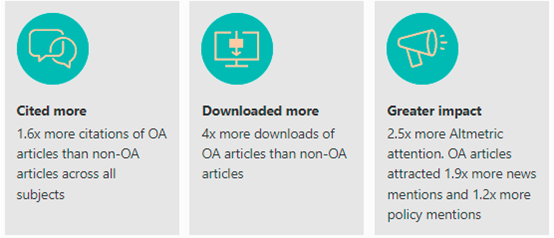
Find out more about benefits of OA.
Article processing charges (APC)
Authors who publish in Scientific Reports are required to pay an article processing charge (APC). The APC price will be determined from the date on which the article is accepted for publication.
The current APC, subject to VAT or local taxes where applicable, is: £2090.00/$2590.00/€2290.00
Visit our open access support portal and our Journal Pricing FAQs for further information.
For information about the APC applicable for articles accepted for publication next year, please see our journal lists.
Open access funding
Visit Springer Nature’s open access funding & support services for information about research funders and institutions that provide funding for APCs.
Springer Nature offers agreements that enable institutions to cover open access publishing costs. Learn more about our open access agreements to check your eligibility and discover whether this journal is included.
Springer Nature offers APC waivers and discounts for articles published in our fully open access journals whose corresponding authors are based in the world’s lowest income countries (see our APC waivers and discounts policy for further information). Requests for APC waivers and discounts from other authors will be considered on a case-by-case basis, and may be granted in cases of financial need (see our open access policies for journals for more information). All applications for discretionary APC waivers and discounts should be made at the point of manuscript submission; requests made during the review process or after acceptance are unable to be considered.
Creative Commons licenses
OA articles in Springer Nature journals are published under Creative Commons licenses. These provide an industry-standard framework to support easy re-use of OA material. Under Creative Commons licenses, authors retain copyright of their articles.
Scientific
Reports articles are published open access under a CC
BY-NC-ND (Creative Commons Attribution
Non-Commercial No Derivatives 4.0 International licence) or CC
BY (Creative Commons Attribution 4.0
International licence) licence.
• CC
BY-NC-ND: The article can be shared for non-commercial
purposes as long as the authors are credited. Permission is needed
for commercial re-use or sharing adapted and derivative
versions.
• CC
BY: The article may be shared and adapted for any
purpose, including commercially, so long as the authors are credited.
To learn more about OA licences visit our licensing and copyright guide.
In instances where authors are not allowed to retain copyright to their own article (where the author is a US Government employee for example), authors should contact the Open Research Support team before submitting their article so we can advise as to whether their non-standard copyright request can be accommodated.
Authors are advised to check their funder's requirements before selecting OA, to ensure compliance. Learn more about funder compliance.